
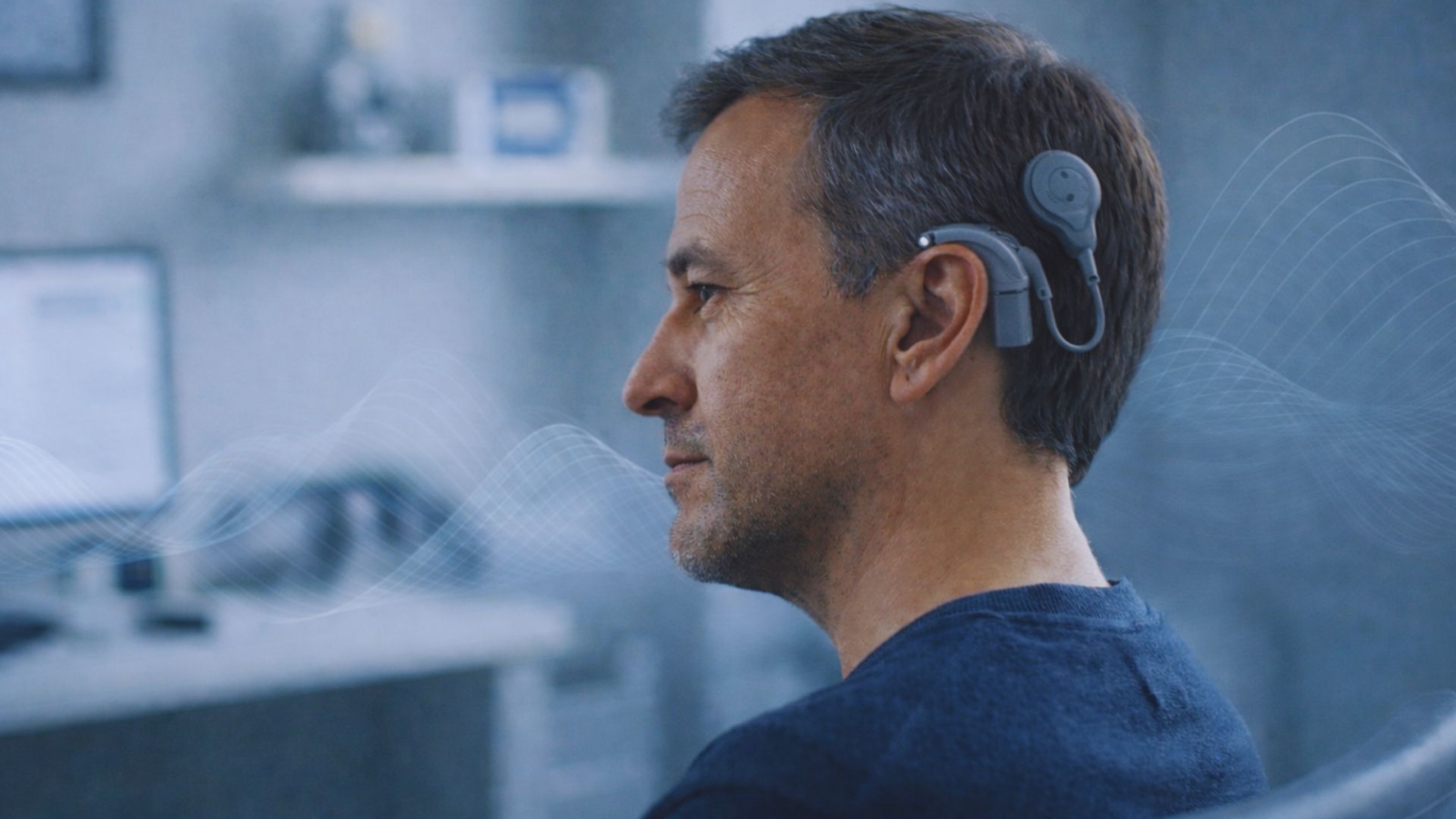
When hearing fades, conversations become exhausting. You miss words, ask people to repeat themselves, and noisy rooms start to feel impossible. For some people with severe hearing loss, cochlear implants can change that, bringing sounds back into reach and making speech easier to follow in the moments that matter most.
What Is a Cochlear Implant?
A cochlear implant works differently from a hearing aid in a fundamental way. A hearing aid turns the volume up. A cochlear implant takes a completely different route, bypassing the damaged parts of your inner ear and sending signals straight to your auditory nerve. Your brain then does something remarkable: it learns to turn those signals into sounds that mean something. It is designed for people whose hearing loss has gone beyond what hearing aids can help with.
Why Speech Understanding Matters for People With Hearing Loss
When you can follow a conversation without straining, everything changes. Talking with family, handling a phone call, chatting with a colleague, it all becomes easier and less exhausting.
- Follow conversations more easily.
- Communicate with family and friends.
- Participate in social activities.
- Improve confidence when speaking.
- Stay connected at work and school.
Can Cochlear Implants Improve Speech Understanding?
Yes, and for many people, the improvement is significant. Cochlear implants give access to speech sounds that hearing aids simply cannot deliver anymore. But it is important to be realistic. How much you benefit depends on several things, your hearing before the implant, how long you have lived with hearing loss, your age, and how committed you are to rehabilitation afterward. Everyone’s journey looks a little different.
How Cochlear Implants Support Speech Processing
Cochlear implants work by converting sound into electrical signals that stimulate the hearing nerve. With consistent use and auditory rehabilitation, the brain can gradually become better at recognizing and interpreting these signals.
Access to Speech Sounds
Sounds you had stopped hearing start coming back. Words that used to blur together become clearer. A cochlear implant gives you access to the speech sounds your ears could no longer pick up, and that access can make a real difference in how well you understand the people around you.
Improved Sound Awareness
There is something profound about hearing a voice you had been missing. Cochlear implants bring back an awareness of the sounds around you, voices, conversations, the everyday noise of life, and that awareness makes it easier to stay connected to the people and moments that matter.
Support for Listening in Groups
Background noise can make speech especially challenging for people with hearing loss. Cochlear implants may help some users distinguish speech from surrounding sounds, although noisy environments can still be difficult.
Auditory Rehabilitation
Your brain will not make sense of everything on day one, and that is perfectly normal. Learning to interpret what a cochlear implant sends you takes time, practice, and patience. The more you wear the device and the more you work with auditory training, the better your brain gets at recognizing voices, speech patterns, and the sounds that fill your day.
Individual Results
Not everyone experiences the same improvement in speech understanding. A hearing evaluation and cochlear implant assessment can help determine whether the technology may be appropriate for an individual.
Final Thoughts
There comes a point where hearing aids are doing everything they can, and it is still not enough. If that is where you are, you deserve to know what else is possible. A cochlear implant is not for everyone, but for the right person, it can bring back sounds and conversations that felt like they were gone for good. Dr Najam’s Hearing Clinic can help you figure out if it is the right step for you. No pressure, just an honest evaluation and guidance you can trust.
Frequently Asked Questions
Some people hear a familiar voice within weeks and feel something shift. Others spend months wondering if things will ever change, and then one day a conversation flows in a way it has not in years.
Cochlear implants may improve speech understanding in background noise, but noisy environments can still be challenging. Results depend on the individual and their hearing history.
No. Cochlear implants are generally considered for people with significant hearing loss who receive limited benefit from appropriately fitted hearing aids. A detailed hearing assessment is needed to determine suitability.
